

Bridge bearings are structural components installed between a bridge deck and its supports. Their role is to transfer vertical and horizontal loads while allowing controlled movement caused by temperature changes, traffic loading, wind and structural rotation.
Without bearings, these movements create stresses that can lead to cracking, deterioration and costly repairs. Selecting the correct bearing depends on factors such as load, movement, environmental conditions and long-term maintenance requirements.
Elastomeric bearings are one of the most common bearing systems used in highway, rail and pedestrian bridges.
Manufactured from reinforced layers of elastomer and steel, they accommodate rotation and moderate movement through controlled deformation. With no moving parts, they provide a reliable, low-maintenance and cost-effective solution for many standard-span structures.
Typical applications
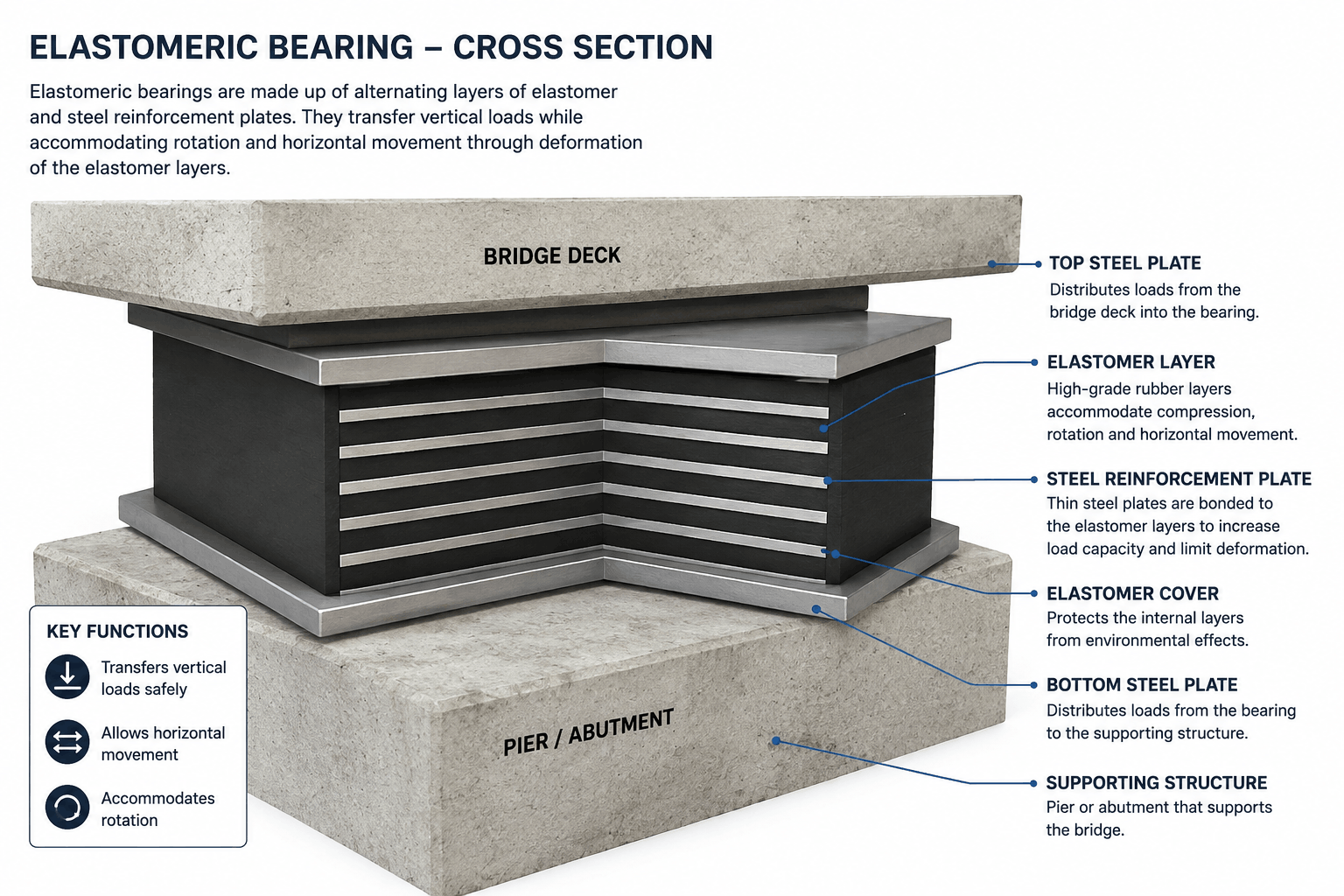
Figure 1. Cross-section of an elastomeric bridge bearing showing reinforced elastomer layers bonded to steel plates.
Slide bearings are used where greater horizontal movement is required.
They use a low-friction PTFE and stainless-steel sliding surface to accommodate thermal expansion and contraction while safely transferring structural loads. They’re commonly specified for long-span bridges, viaducts and structures exposed to significant temperature variation.
Typical applications
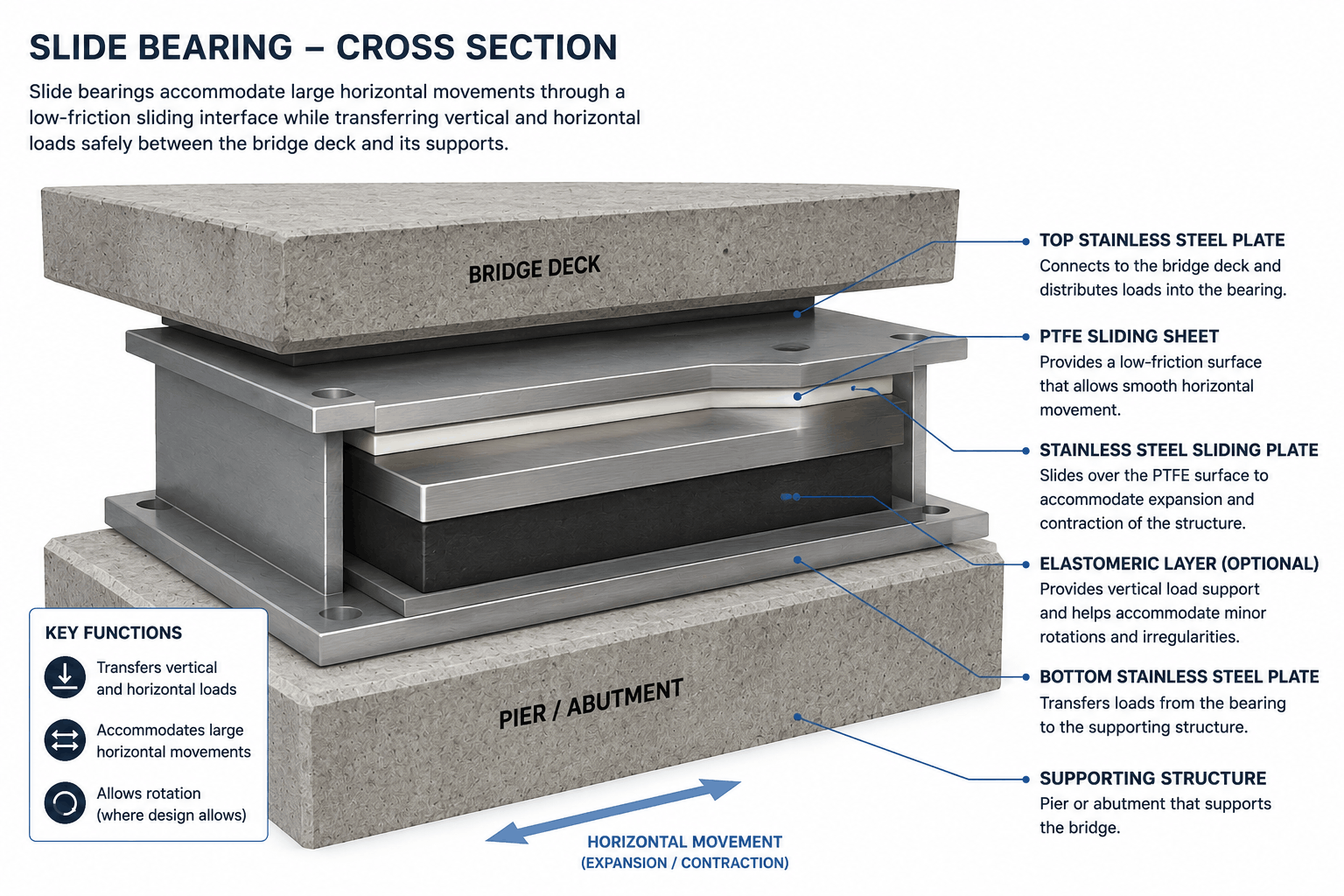
Figure 2. Cross-section of a PTFE slide bearing designed to accommodate large horizontal movements.
Other bridge bearings such as pot bearings, spherical bearings and fixed bearings are used where higher loads, larger rotations or specific movement characteristics are required. These systems are typically specified for larger infrastructure projects following detailed engineering assessment.
Selecting the correct bridge bearing requires more than matching a load capacity. Engineers must consider how the bridge will move, the environment in which the bearing will operate and the expected design life of the structure.
Example: A standard highway bridge may only require elastomeric bearings because movement is relatively small. By contrast, a long-span viaduct experiencing significant thermal expansion may require slide bearings to accommodate greater horizontal movement.
The checklist below highlights the key factors that should be reviewed during specification.
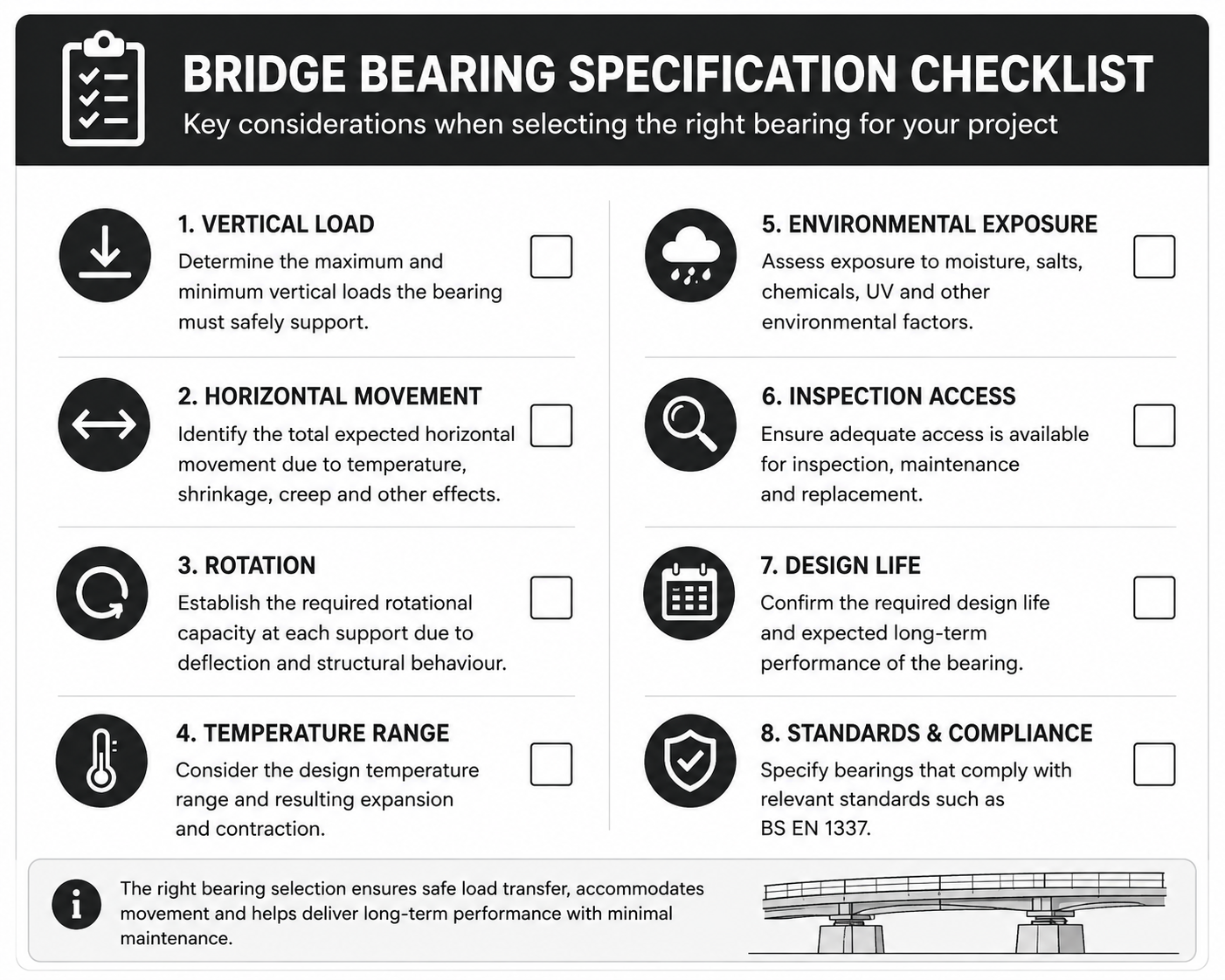
Incorrect specification can significantly reduce bearing performance.
Common issues include:
Bridge bearings should be inspected regularly to identify signs of elastomer ageing, PTFE wear, corrosion or restricted movement before these affect the wider structure.
In the UK and Europe, bridge bearings are commonly designed and manufactured in accordance with BS EN 1337, which sets requirements for materials, testing and performance.
Although relatively small components, bridge bearings play a critical role in protecting bridge structures by safely transferring loads while accommodating movement and rotation.
Whether specifying elastomeric bearings, slide bearings or specialist systems, selecting the correct solution requires careful consideration of structural behaviour, durability and long-term maintenance. Working with an experienced bearing manufacturer helps ensure reliable performance throughout the bridge’s service life.
Need help specifying a bridge bearing? Speak to the SK Bearings technical team about your load, movement and application requirements.
 A Major Investment in Our Manufacturing Capability
 Progress update: Our new press…
 New Websites
 New Technical Data Sheets
An SK Bearings expert is on standby with all the information you need for your sales related enquiries and to provide you with all the technical information you need for your bespoke solution or product.







 01223 835623